Internship Experience #6: 90.5 FM WCBE Columbus
A major portion of my work at the WCBE station involved collaborating with other students, namely other interns from Columbus Alternative High Schools (CAHS) and Fort Hayes High School. This work involved a lot of different projects, some of which were created and executed by them with the Capital interns’ assistance and some created and planned by us with their assistance. A majority of these projects revolved around the creation of promotional messages and student-based content, from simple advertisements for upcoming performances to major student podcast projects with multiple different episodes. In this blog, I not only want to touch on the individual collaborative student projects in detail, but I also plan to note how working with younger students both changed my perspective on the work I was doing and encouraged me to better my instructional skills.
The first major project I want to touch on was the Voice My PSA project. This was one of the first projects I was introduced to at WCBE at it instantly gave me insight into who the high school interns were and what some of their interests were. I was tasked with editing all of the current recordings as well as helping the CAHS and Fort Hayes students record new VMPSA’s throughout the internship. This project really helped me work on basic broadcast and marketing skills. I had to make sure the the vocal message was really clear and audible while also ensuring that the background elements like music and effects weren’t too overpowering on the vocals. I also had to make sure that each recording was normalized to the proper broadcasting levels so that they didn’t sound too quiet over the air. This project culminated in my creation of a sampler VMPSA that included portions of each student’s VMPSA spliced in between my own vocal description of the project. The small editing challenges I faced really helped me understand more about editing for broadcast, allowing me to prioritize which edits would increase broadcast quality.
Somewhat similarly, I also ended up recording and editing a bunch of different promotional messages for the high school interns. There were several large performances and events throughout my internship experiences, from live Studio A performances, to a Fort Hayes Jazz Masterclass with Linda May Hahn Oh, and even a couple for the Spring Fund Drive. All of these promos were written by the high schoolers and approved by Johnny, but when it came to recording and editing for broadcast, that’s where myself and the other Capital interns came into play. We not only did this for the high school promos, but also for our own, so it’s hard to come up with an accurate number of promos I helped create, but it was a large number spread across the entire 3-month duration.
Another big project for myself and the rest of the Capital intern group was the StudentConnect Podcasts. This was a podcast series project that was, more or less, fully in the control of the CAHS student interns. It was meant to be a high school initiative, introducing the high school interns to the recording process, being in front of microphones, and planning their conversations/interviews in advance to take up the proper amount of time. The biggest challenge from this project came from the recording sessions, as they all took place in WCBE’s Studio A. This room has a great setup for bands to play (despite the sqaureness of the room), but it was a bit difficult to set up the room for podcast purposes. Firstly, there were only three AKG microphones that we could use and, oftentimes, that was not enough microphones for each person involved in the podcast. Our first recording session also faced a lot of difficulty in getting the board to work. We ended up having to get two other show hosts, Mike Foley and Mike Taylor, to help us figure out how to record with headphones and talkback working properly. Once the recording was started however, the session ran quite smoothly and recording became easier and easier for the other two podcast iterations recorded.
The larger difficulty of this project came from the editing process. We realized the recording board in Studio A is quite odd in how it records, processes, and exports files. If exporting from the board’s USB drive, the file would show up on my computer as a stereo file, which is what I worked with for the first podcast episode. This was a complete nightmare: I spent a decent chunk of time simply separating all the speakers’ voices onto separate tracks to edit them accordingly. Only after, did I go back to the beginning of the episode and begin the necessary edits to get rid of clicks/pops, quiet down breathing sounds, and clear up individual voices with a bit of EQ and compression. Additionally, the students lacked a few handy microphone speaking skills, so there were more sound artifacts and mouth noises than I was used to. Overall, the entire editing process was extremely tedious for the first StudentConnect episode. Luckily, for the two episodes recorded after the first, we were able to figure out a much better method of exporting. We realized that the Studio A board also had an SD card inserted into the back on the console as a backup storage device. Here, we found multitrack copies of our sessions and decided to use these versions going forward for editing simplicity. With the vocals already separated onto their own tracks, instead of spliced all together in stereo, I was able to jump right into editing. As the students continued in their internship, they also got much better at speaking in front of a microphone, having a lot more clarity and confidence by themselves and leading me to not have to make as many edits by the third podcast episode. It was honestly very inspiring to see such a large amount of growth in a short time, both from my group of interns and from the high schoolers. We evolved from struggling hard with a project to adapting and learning how to do it effectively, just over the course of a month of so and a few different attempts. Despite how tedious it may have been, I’m very grateful to have worked on this project, as it gave me a lot more podcast/vocal editing experience and really changed my perspective on podcast production. I understood why long podcasts can take an extended amount of time to properly edit simply because of the amount of content and I’m glad to say that I have gotten much more efficient at the process, adding another skill to my resumé.
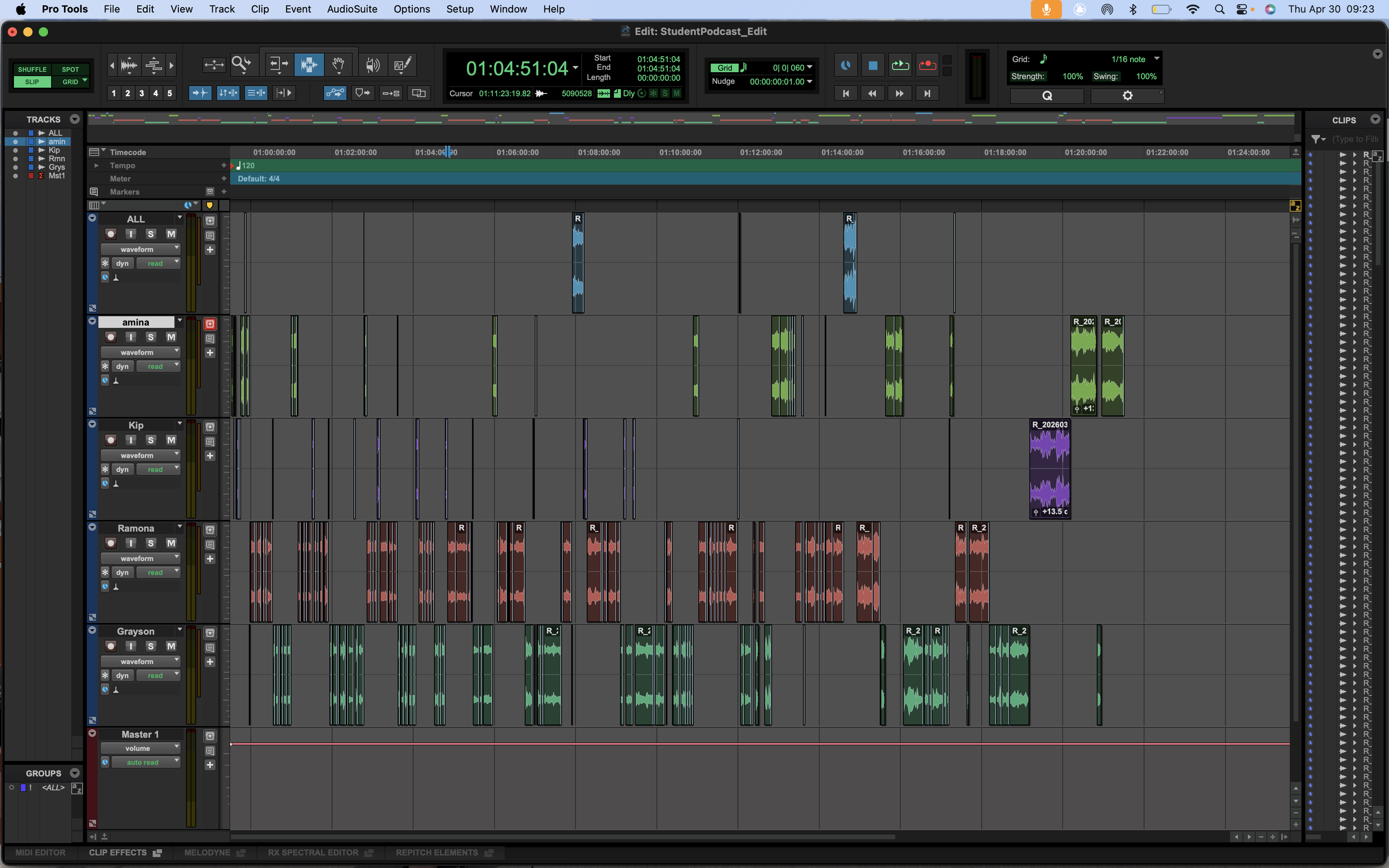
Here’s a screenshot of the finished editing session for the first StudentConnect podcast episode, with each voice separated onto respective tracks, rather than condensed in stereo.
The last project I want to detail is the InternViews/ClassChats intern project, which was the Capital intern project. Johnny told us in the beginning of our internship experience that he would like to see a collaborative project between the interns, lead by the older interns as a sort of “younger-and-older-student’ initiative where we would “pass down” our audio production knowledge, bit by bit. While we could never fully decide on a name for the project, we quickly came up with an idea for an interview segment between the Capital and high school interns, in which we would interview the high schools and dive into depth more about them as a person, connecting it to their love of audio/music and how they came down the path to interning at WCBE. We came up with questions intended to talk more about the interviewee’s special interests and hobbies, rather than just music, and set up our recording sessions in the same Studio A as the StudentConnect podcasts. I was not the lead editor of the project files (as I was the major editor of the StudentConnect episodes), but another Capital Intern, Will C., was able to edit them all appropriately and even make a sampler out of the different interview recordings. Below, I’ve included one of the full-length episodes to listen to.
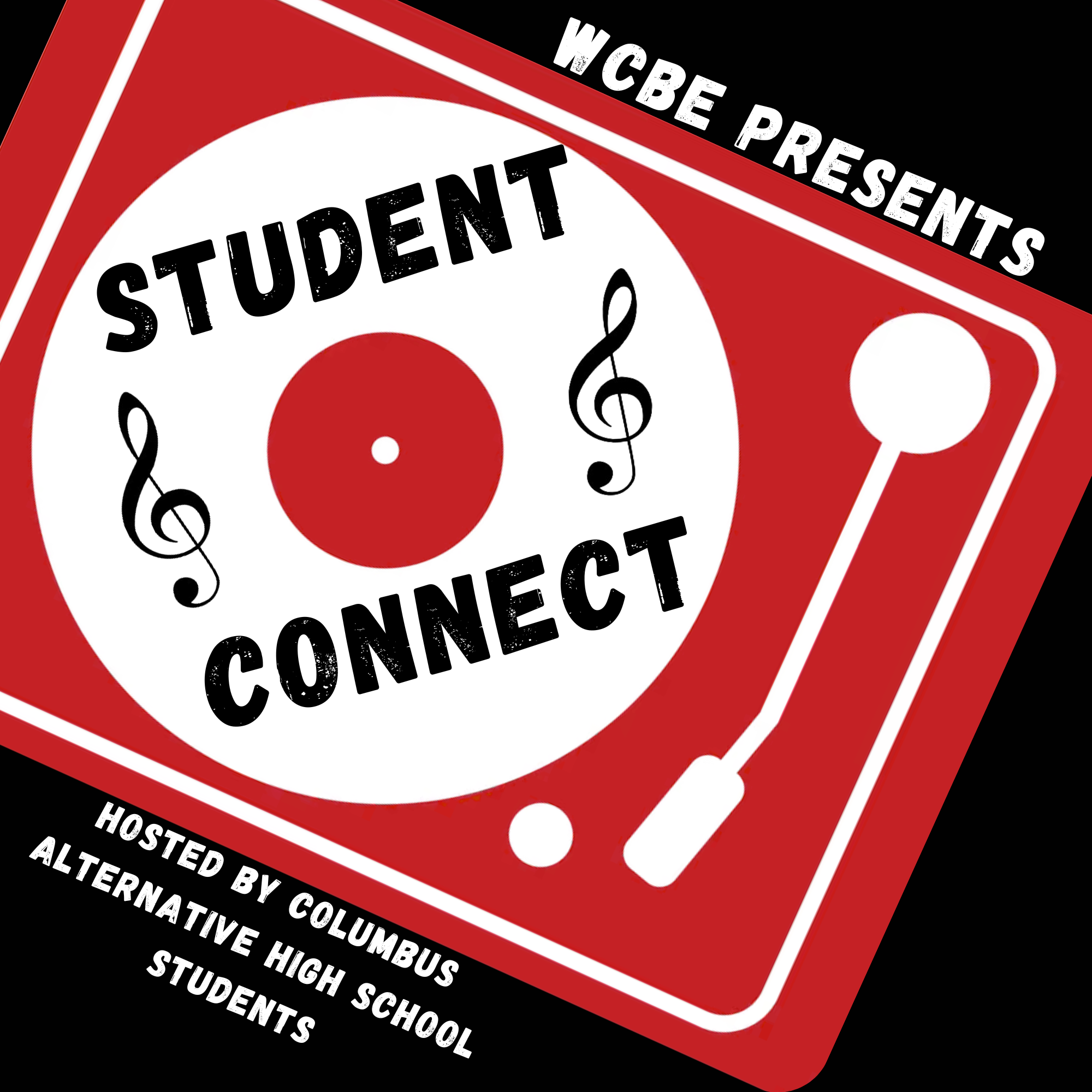
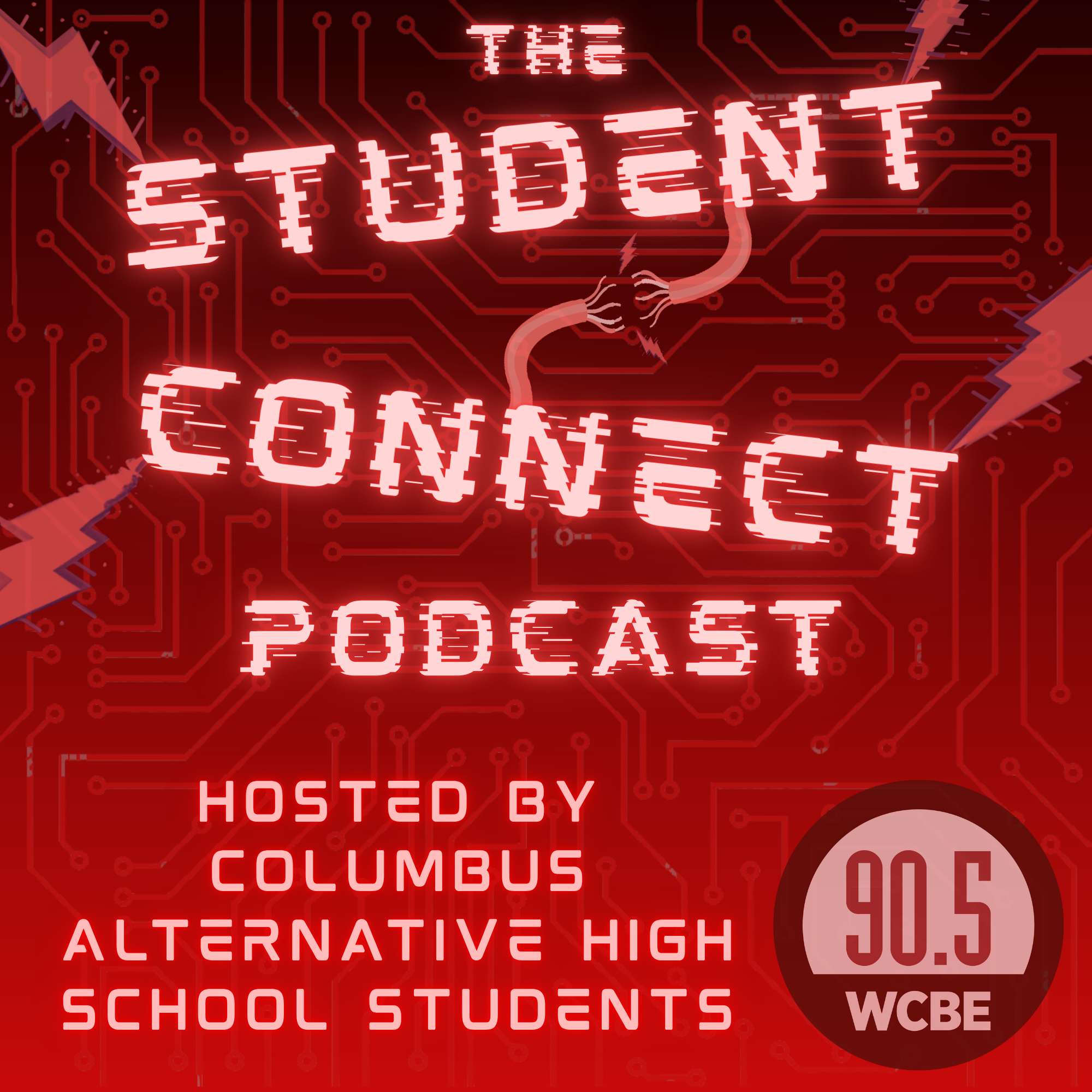
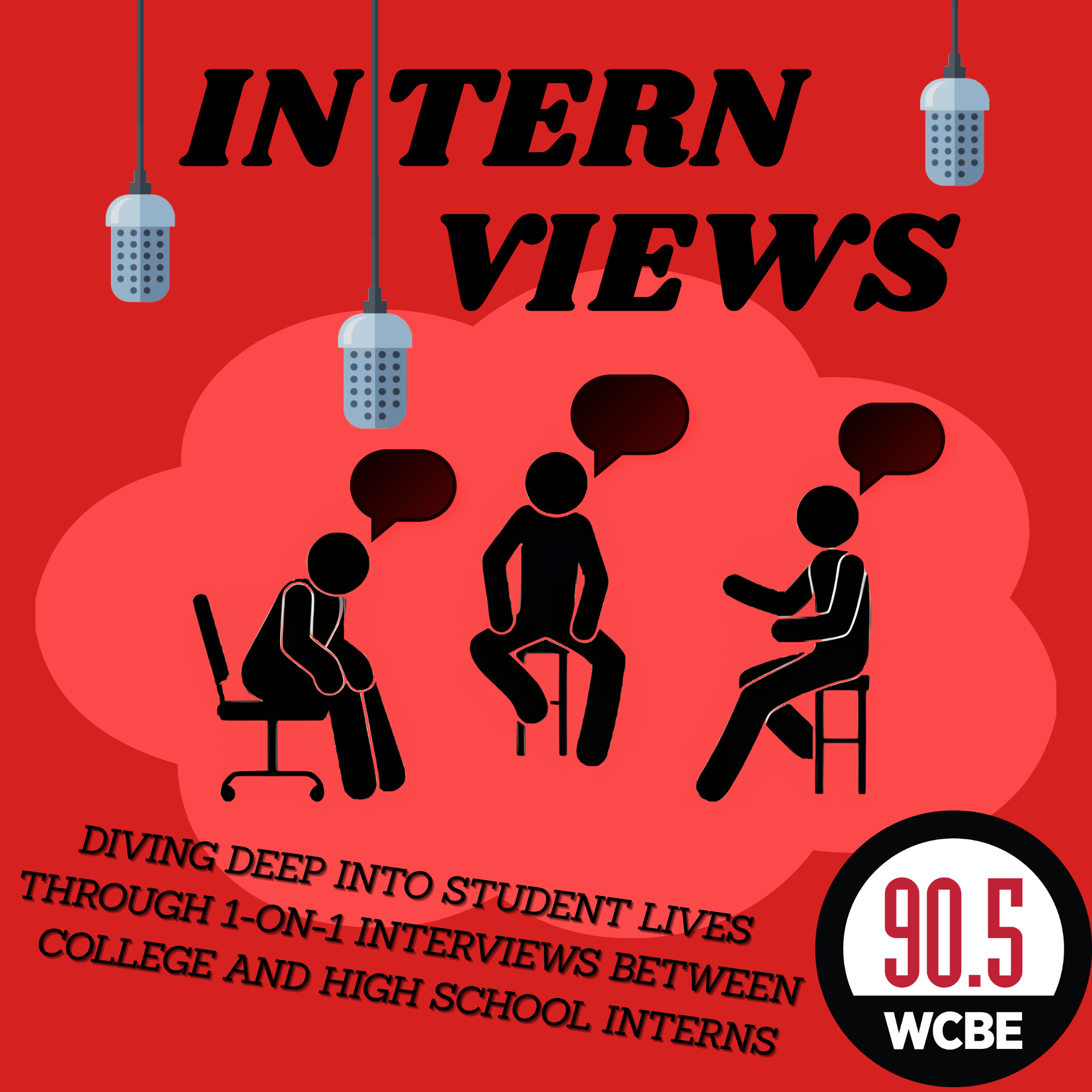
With both the StudentConnect podcast and the InternViews segment, I was also tasked with creating logos for both projects to be displayed on the WCBE website under their Student Media section. This was honestly pretty easy and I had a lot of fun with the graphic design challenges involved with creating something new and unique compared to the rest of the WCBE graphics. I initially created very audio and music-centric logos for both projects, but after talking with Johnny, we realized that these logos shouldn’t look like the rest of the past WCBE images, so I challenged myself to create something brand new. Below are all three interations of logos, with the electrified StudentConnect logo being the “new and improved” version.
Finally, I definitely want to touch a bit on how all this collaborative work between advanced and intermediate students has changed a lot of my perspectives. Throughout this entire internship, my interactions with the high school interns felt a lot like a substitute teacher talking to a high school class. It was a little odd to get used to at first, and they certainly didn’t impress me with their work engagement or levels of respect. In truth, they were kind of lazy at the start of my internship experience and it was a struggle to get them really involved in the WCBE workload. However, it really made me think back to my own high school experience and how I had a very similar attitude as they did. It changed my own attitude, one from being a bit judgmental and harsh in my critiques to one that was trying to encourage their engagement while maintaining their respect. I started trying to act kind of like a teacher, giving them useful vocal techniques and speaking inflections to help better their microphone skills. I tried my best to also teach them about the software and hardware, trying to get them involved in the recording and editing process as much as I could. I don’t know why, but I kind of liked that feeling of teaching. I definitely don’t think it would be enjoyable in a class setting, but the boss/interns or even master/apprentice dynamic really appealed to me as my internship progressed, which was completely unexpected.
