Learning Gear with No Fear!
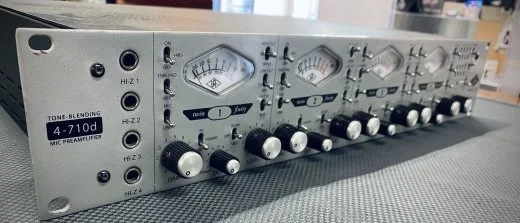
Universal Audio 4-710d Four-Channel Tone Bending Mic Preamplifier
When Universal Audio’s original 710 ‘Twin-finity’ preamplifier came out in the late 2000s, some regarded it as unique because of its ability to switch between tube and solid-state preamp gain stages. Others weren’t as enthusiastic about the product, mostly because of a strong sentiment expressed by musicians like Greg Walker: “I prefer my pre’s to do one thing well and leave it at that.” That all changed when UA released the 4-710d Four-Channel Tone Bending Mic Preamplifier in 2010. The sleek, silver-brushed preamp contains eight total channels, despite its name: four, main input/output channels, featuring mic/line inputs, insert send and return, standard input/output gain controls, phantom power, -15dB pads, phase inversion, and 75 Hz HPF’s, and the other four line-level-only channels found in the rear (additional High-impendance line-level inputs in the front as well). The four main channels also contain something unique: the ability to blend between transistor (solid-state) and tube gain stages. This allows for the warm, vintage sound of a tube preamp, the punchy, reliable sound of a transistor preamp, or a blend of the two sounds together depending on the track and recording. The 4-710d also comes with built-in 1176-style FET compressors with a fixed 4:1 ratio and a fast/slow levers to determine the speed of compression (both speeds are fixed).
Because of the preamp’s combination of circuitry, recording artists and engineers can choose between the warm, smooth tube sound for some tracks and the punchy, accurate transistor sound for others. According to Matt Houghton of Sound on Sound, “Whether in solid-state or tube mode, the sound of the hybrid preamps is rich and characterful, in a pleasingly musical way…”. In other words, the real power behind the ‘Twin-finity’ feature is the ability to blend both tube and transistor effects, creating both a dynamically responsive sound while retaining strong and clean signal levels. While the 1176-style compressors have their limitations (fixed ratio, threshold, and attack/release speeds), they are still a strong addition to the device and capable of a fair range of compression effects when combined with other elements during tracking. As a highly versatile preamplifier, I’ve seen this being used for several different styles of tracking. For bands, for example, I’ve seen this preamp used (and used it myself) on drums, vocals, guitar, and bass. Greg Walker of AudioTechnology has used it with piano and string instruments like cello and bass and Matt Houghton has hooked up his Juno 6 synthesizer to it, so it clearly is quite a versatile piece of hardware in a studio setting. One of the more special features I’ve seen boasted about this device is the ease of A/D conversion that comes along with it. A simple ADAT lightpipe will allow easy and seamless connection to an audio interface and DAW setup is quite straightforward.
Manley FORCE 4-Microphone Preamp
Manley Laboratories, founded in the 1980’s by EveAnne Manley, has always made a point to be a brand known for their streamlined products focused on high-end audio quality. Starting with the Manley CORE Reference Tube Channel strip, they quickly also introduced the Manley FORCE 4-Channel Mic Preamplifier. Like its predecessor, the FORCE is loaded with the same, super popular high-voltage vacuum tube preamps found in the CORE channel strip. Additionally, the FORCE also comes with 4 channels of gold-plated XLR inputs/outputs, 7-segment LED metering, 48V phantom power, selectable gain levels (Low vs. High), 120 Hz HPF’s, phase inversion, variable input attenuation, hand-wound transformers, and front-facing ¼ in. direct inputs for each channel. Manley boasts about the strong 300V DC current that powers the vacuum tubes, as well as other voltage rails to power the system circuitry. With the high-intensity power comes high headroom, and all the while, the warm and buttery tone of the vacuum tubes are sonically preserved and maintained despite the hefty power load.
Sonically, Manley has a keen focus on maintaining signal integrity and purity. In the opening introduction of their manual for the preamp, its even stated, “The FORCE offers a very natural, clean sound with minimum coloration.” This allows for a crisp, solid, thick sound with a slightly stronger boost to the low ends and flattening to the highs. Many reviews have talked about their recording sessions on drums and vocals, plainly showcasing how this boosting of lows and flattening of highs affects their recordings in positive ways. Steve La Cerra from MIX Online experienced this high-end effect in several sessions: for acoustic guitar, he mentioned the bright and airy effect it had through the FORCE. For male vocals, he described them as crisp and finished with a murky timbre, and for drums, La Cerra remarked on the strong and clear impact sounds with a full range of low/low-mids. Finally, from all reviews I’ve read, the headroom is a godsend and one of the best qualities of this piece of hardware. More headroom allows recordings to be louder without the added strain on the preamp. The Manley FORCE has just as much quality with stronger signals as with softer ones, highlighting its dynamic versatility in the studio.

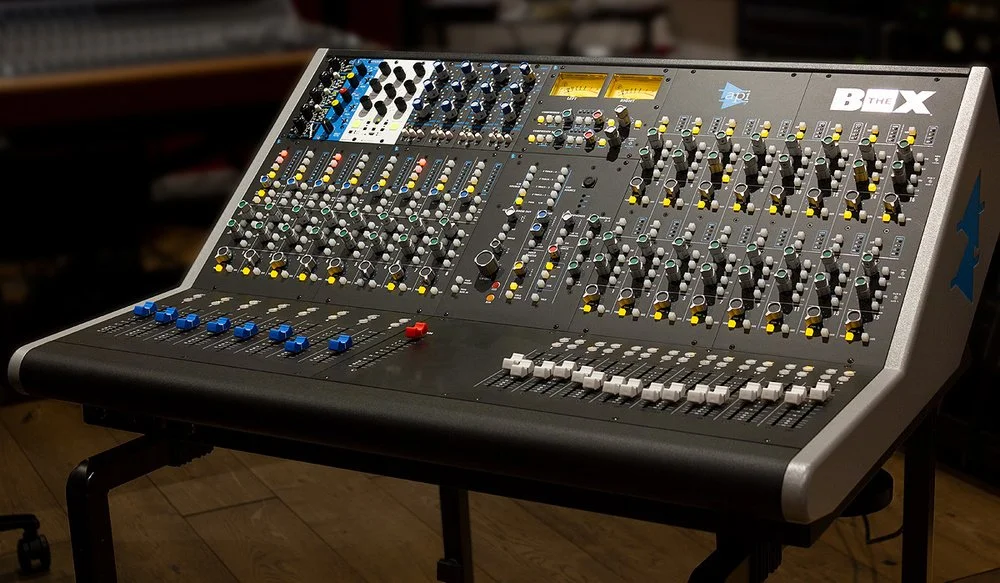
API The BOX Console
Despite debuting in the music technology industry only 11 years ago, API’s “The Box” Recording console has already made its mark and become a fan-favorite in the recording world. Its long list of features includes four input channels (all with mic/instrument/line API 548B preamps and HPF’s, two of them come with integral 550A EQ as well), two on-board assignable compressors, 16 summing channels (or 24 during mix), an on-board stereo bus compressor, a stereo program bus with master fader, insert, and external input, a talkback system, and much more. I’ll focus mainly on the preamplifiers provided in the input channels, the API 548B’s. These preamps originally debuted back in the API 1608 recording console and provide +10dB - +45dB of gain, an additional +20dB from the input transformer, and allow for HI-Z instrument input and balanced line input. According to consumers and reviewers, the preamps provide whatever consoles they’re in, whether it be “The Box” or the 1608, with a classic API sound. From reading reviews, the ‘Classic API sound’ seems to include a solid low end, a bright and clear high-end, and and wide gain range. These characteristics provide strengths for a wide variety of instruments, including vocal recordings, drums, guitar, and more.
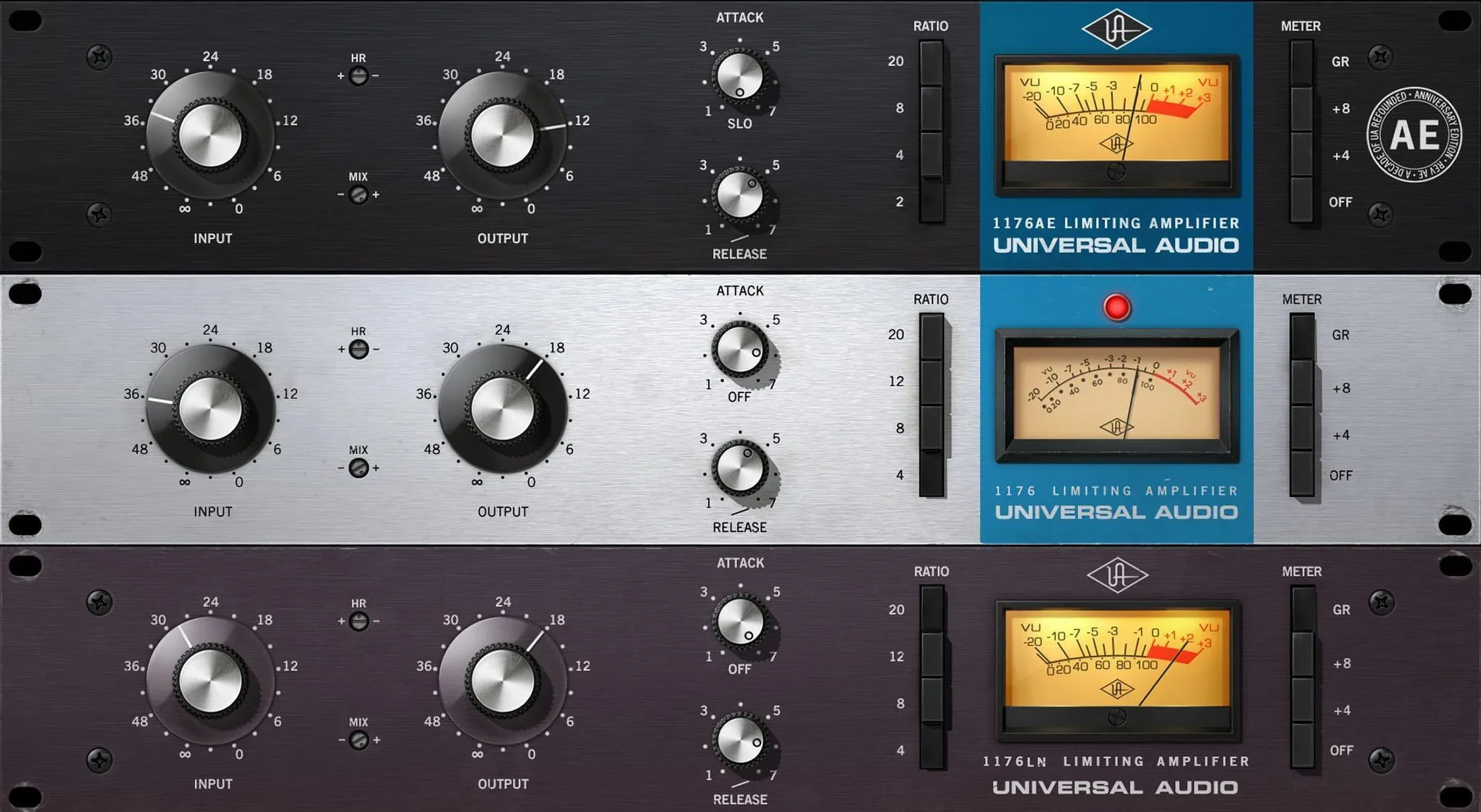
UA 1176LN Compressor
Bill Putnam, founder of Universal Audio in 1958, created one of the most iconic and distinctive-sounding compressors only a decade after starting his company. The 1176LN compressor, released in 1966, was one of Putnam’s first products that replaced vacuum tubes for solid-state circuitry and Field Effect Transistors (FETs). It has a Class-A amplifier, up to 45dB of gain, extremely fast attack (variable between 20 μs and 800 μs), release time between 50 ms and 1.1 sec., Compression ratios (4:1, 8:1, 12:1, 20:1), a VU meter, a stereo-link RCA jack in the rear, and a meter select option. Over the years, there have been multiple different iterations of the 1176 like the Silverface variations, which provided the same dynamic control with slightly less signal coloration, or the 1176 AE, which was released on the 50th anniversary of the original 1176 and comes with several expanded, state-of-the-art features. In the modern, digital age, most of these variations also come in plug-in form, capable of being downloaded to your computer and saving rackspace while maintaining iconic compression.
Overall, this is a fast compressor. It’s probably known the best, if not solely by some, for its incredibly fast attack speeds. Even without the compression enabled, an online UA blog cites the amplifiers and transformers within the 1176 as capable of providing a “hot quality to anything passing through them”. Earlier versions often came without the added LN (Low Noise), so they allowed some bits of distortion, coloration, and noise through the signal. The Blackface variations seem to be the most popular and the most revered, advancing from a lower noise floor, then to higher gain, and the latest variation also provides a much cleaner sound through an Op-amp rather than an input transformer. This compressor is highly recommended for most band recordings (‘band’ meaning the typical vox, gtr, bass, drums) as it has a certain feature or characteristic for a wide range. For vocals and drums, the 1176 quickly tackles transients without that overcompressed sound, and for drums specifically, the quick attack can actually add more tight punchiness to the beat. For bass and guitar, the 1176 does a great job at providing more sustain and grit, allowing natural bass transients to flow through and maintaining dynamic levels for guitar parts.
Daking VCA 500-Series Compressor
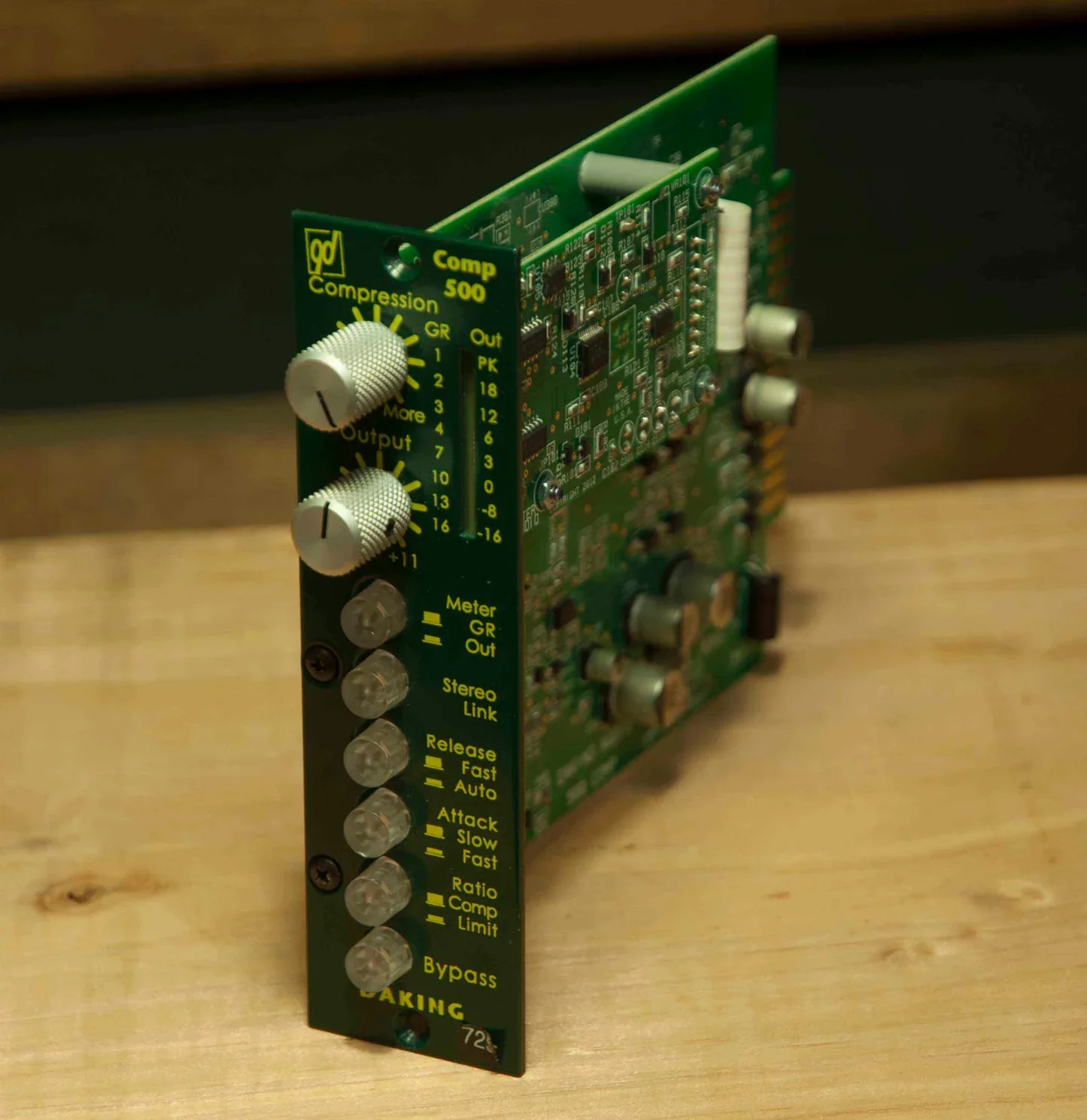
The Daking VCA 500-series compressor is not often talked about for its unique tone or sound qualities (especially when sat in the same studio as an 1176). However, the VCA 500, released in the early 2010s, still holds up today as one of the simpler compressors that’s quite easy for beginning and advanced studio producers alike. The device takes many components and qualities of larger Daking compressors like the FET II and FET III stereo compressors, coming with input/output knobs, bypass, fast/auto release, fast/slow attack, and two ratios (4:1 compression and 16:1 limiting). It also includes meter options and an extremely accurate stereo link when combined with another module (can combine with up to six!). Many cite the most valuable aspect of this piece of gear to be its simplicity without adding or compromising dynamic effects and signal coloration. According to Geoff Stanfield of TapeOp, the compressor comes with a distinctive “sound” like many other pieces of gear, but it's not invasive into tracks as with other hardware. “When the compression level was cranked, the tracks were, as expected, audibly compressed, but even at this extreme it didn't sound bad.” Geoff says he tried to make the compressor sound bad, but he couldn’t find a way to make the punchiness or limiting so severe as to disrupt the entire production. In his experiments for how to “break” the compressor, he found out that it does a fine job at rounding out high end (taking away the need for an EQ for this purpose) and concluded that he’d choose the VCA 500 over compressor plugins any day.
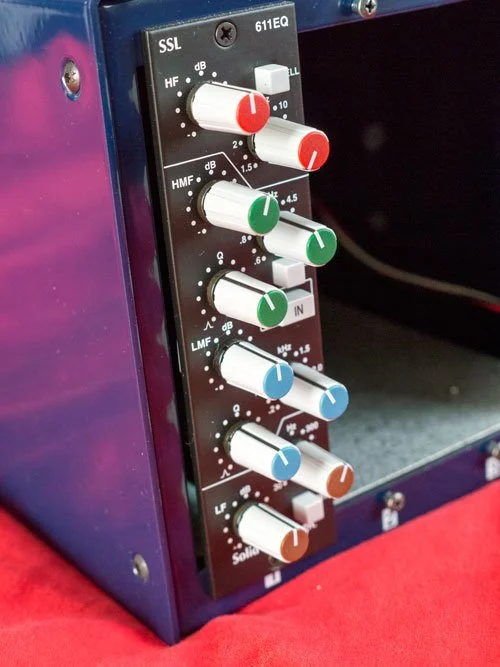
SSL 611EQ E-Series EQ
Hailing from the birthplace of beans-on-toast during the decade of rock, Solid State Logic (SSL) has been a staple in the music industry since their inception. Just over a decade ago, SSL launched the 611EQ E-Series EQ (built off API 500-series standards). This piece of gear comes with four sweepable frequency ranges (highs, high-mids, low-mids, lows) and fully parametric controls for both mid-frequency sections. Since many of the frequency bands overlap, the 611EQ serves just as well when subtracting frequencies as when boosting them. It also comes with bell curve options for the highs and lows and, uniquely, it allows the studio producer to choose between two types of EQ circuitry designs, Brown and Black. The thick and smooth nature of the Brown circuitry is more suitable to drums, according to John Baccigaluppi from TapeOp. He says, “[The brown EQs] have a girth and harmonic structure that sounds great. The black EQs, on the other hand, sound really good on vocals and guitars when you need them to punch through a mix." The punchiness from the black EQ’s doesn’t override the track, but brings the necessary sonic in-you-face attention to that particular part in the mix. One unique, slightly unfavorable aspect of the device is its lacking of a chassis, making it a little odd to insert into a rack. Otherwise, though, the hype for the 611EQ (and all other SSL rack/desk gear) is well-deserved.