Build-Your-Own Gear Shoot-out
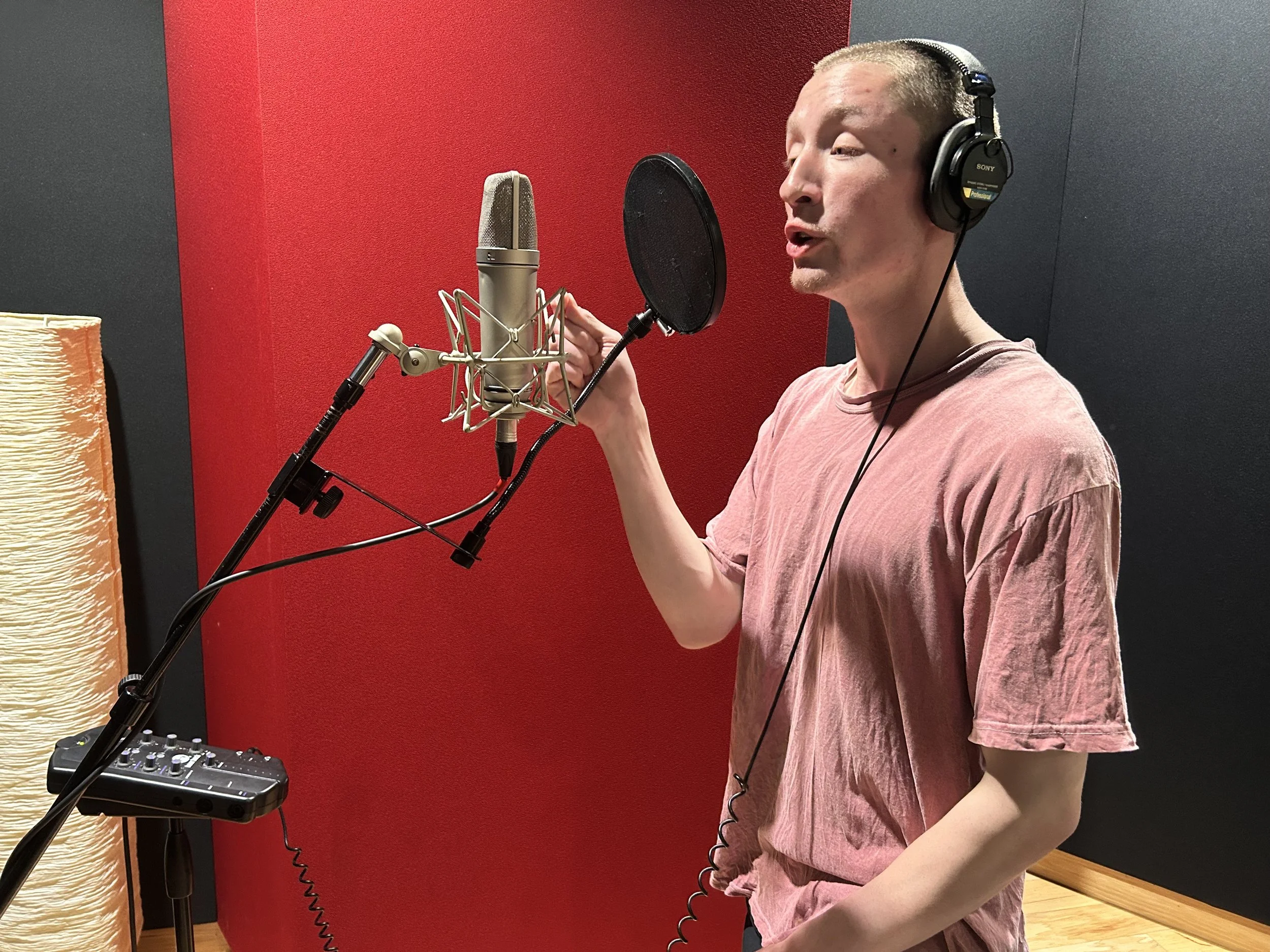
For my Gear Shootout Project, I really wanted to do some work with preamplifiers more than anything else. I feel like I have a solid understanding of the microphones and outboard processing units in studios A, E, and F, but I haven’t had much experience researching and critically listening to the preamps. Studio F had the most preamps that I was unfamiliar with so I decided to conduct my experiment there. My initial thought for a gear shootout involved a deep-sounding male vocal singing old-timey song lyrics through different solid-state and tube preamps. I wanted to see which modern-day preamp would sound the best with old-fashioned lyrics and vocal styles like that on the hit song Sh-Boom by The Chords. To do this, I enlisted the help of one of the most sonorous voices on campus, Joe Gould. We set up a U87 microphone in the vocal booth and recording was a pretty simple process to start up. Upon starting the project, I thought it would be interesting to record both the high and low vocal parts of Sh-Boom and see which preamp would produce the both the best high and low harmonizations.
Out of my three research articles on recording vocals, two of them talked about their top gear to use and one article gave me pointers on vocal recording techniques. VintageKing and ProSoundWeb both had lists of overall high-quality preamps, some of which I believe we have alternate or updated versions of. They both mentioned the Shadow Hills Mono GAMA preamp which I ended up using, but the rest of the preamps they talked about weren't in the studio. However, some of the notable preamps I saw listed were mostly Neve, UA, API and SSL and, while I know we have some API preamps in Studio F’s The BOX, I wanted to stick to my preamp choices. The last research articles from SoundonSound talked mostly about helpful albeit prior knowledge on recording vocals. Many of their pointers involved mic positioning and adhering to performer needs, much of which I’d already experienced in recording sessions before.
For this preamplifier shootout, I decided to go with a split between tube and transistor-based preamps. I wanted this split to see if there was a good modern-day preamplifier that could replicate old-timey vocals with solid clarity and good tone. With my late addition of the high vocal part, I also thought it would be great to see which preamps fit both for high and low vocal parts all-in-one. For my tube-based preamps, I chose the Manley FORCE and the UA 4710d, which I turned to 100% tube. Interestingly enough, I found myself wanting to see the difference between the tube and transistor setting on the UA, so I also used the same preamp as a transistor preamp along with the Shadow Hills Mono GAMA preamp. I think the Manley and the UA were quite similar in their simplicity. The UA had a couple more aspects to change, most impressive being their 1176-style onboard compression, but many of these features had to be turned down or off in order to get the most basic preamplifier sound out of each piece of gear. The most changeable was the Shadow Hills, as it had three options for interchangeable transformer paths (Nickel, Discrete, and Steel). We ended up going with a setting between Nickel and Discrete as this area gave the best and most-basic-sounding vocals.
To keep it simple, I’ll go over the tube and transistor characteristics I noticed for the high vocal part and vice versa for the low part. For the low part, the UA and Manley tube-based preamps both had a bit of resonance. The UA sounded a lot smoother and clearer than expected, especially on lower frequencies. While it had a bit of gravelly sound, it also was less than expected for the low part. The Manley shared many of these same characteristics but also felt more stiff and clear, especially towards the warm low end where clarity is sometimes lost. For the transistor-based preamps, the low vocal part both sounded the worst and the best. On the UA transistor setting, the vocals sounded the worst out of the four. The tone was much less warm and smooth (as expected) but there were also negative effects on the articulation. I don’t know whether it was microphone interference or perhaps a studio error, but another downside was the low, small amount of hum that both Joe and I kept hearing from the UA transistor. Overall, it definitely sounded at least the most bland. On the other hand, the Shadow Hills Mono GAMA preamp was the other solid-state preamp used and this one sounded the best. The clarity was pristine and the articulation and frequency response were on point. However, there were some downsides, specifically on the low end of the frequency spectrum. I noticed the preamp had an airy tone to it, which didn’t match well with the low vocal part, and this made the low part sound a bit hollow compared to the rest.
For the high part, I noticed a lot of different things going on for the tube-based preamps. The UA tube setting sounded somewhat similar to its transistor setting, but it was quite obvious that it had lost its boldness and pop. I thought it was quite good at handling sustained notes though, as it retained a warm quality in them. The Manley definitely brought out a lot of vintage tone in Joe’s voice, but it also brought out something ugly: sibilance. I noticed a lot of it both at the beginning of the take and end of the take, even though it sounded like a regular take to myself and Joe as well. The transistors took the cake for the high vocal part, as both of them sounded extremely good, transparent, and clear-toned. The UA transistor setting was the most forward-sounding preamp setting out of all takes. Imagine if the UA tube setting was regular font, the UA transistor would be bold and underlined. Both the UA and Shadow Hills preamps were very clean with basically no noise. Despite the Shadow Hills preamp struggling with too much airiness on the low part, it worked in its favor for the high part and helped bring out some more high-frequency pop.
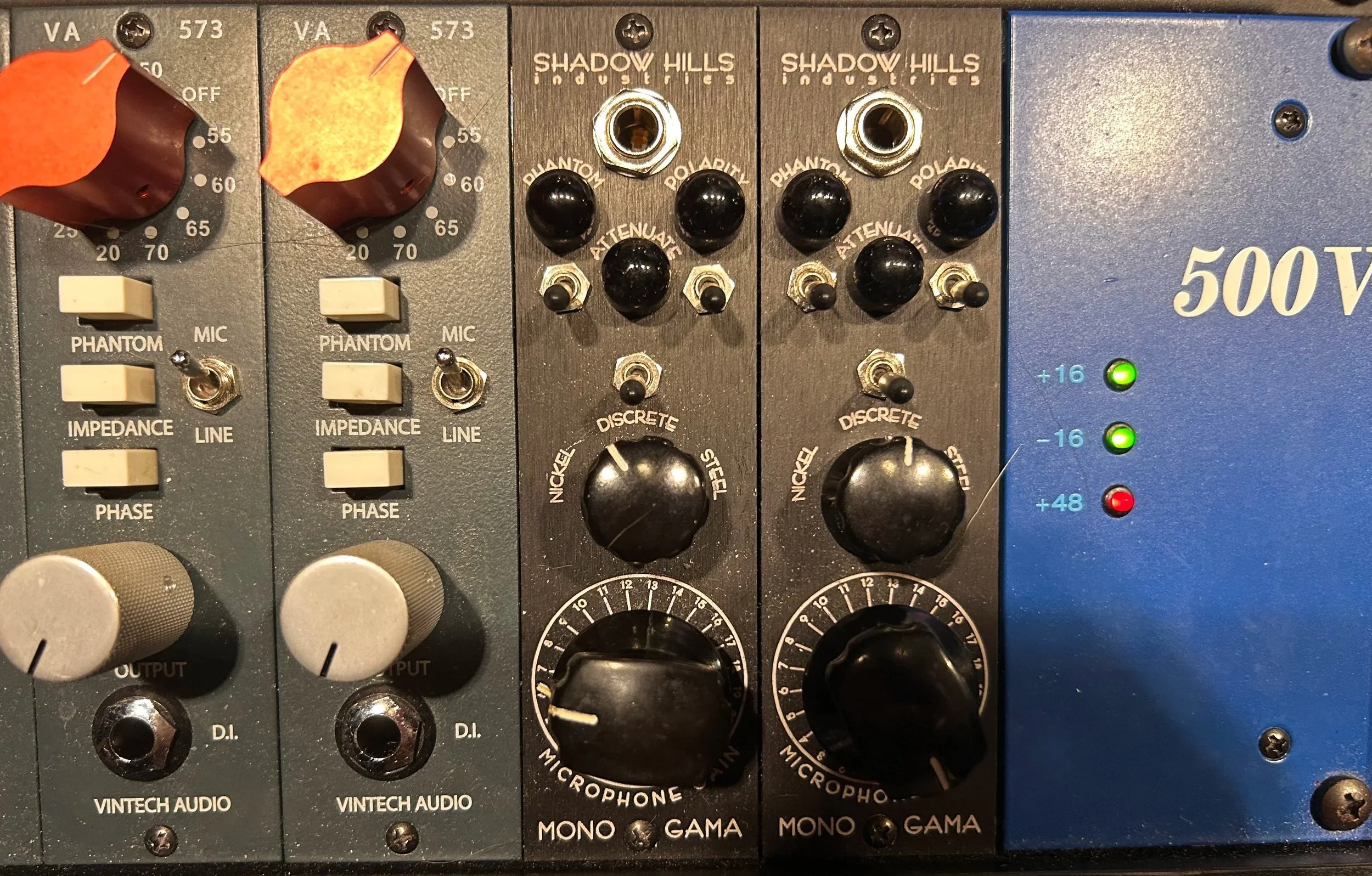
My preferences mostly revolved around pairs or groupings of preamp takes that I thought sounded good together. If I had to pick a single take out of all eight, I would have to choose the high part on the Shadow Hills preamp, mostly because of its sonic clarity and crystal-clear tone. I also really enjoyed the boldness of the UA in both transistor and tube settings. I thought that, overall, this preamp could probably sound the best after potentially experimenting with a combination of tube and solid-state. In terms of groupings, I thought the best pair were, hands down, the shadow hills recordings. I thought that they produced a strong, super cool harmonic resonance and definitely had the best vocal lyric sync as well. I feel that, if I added a middle vocal part, then the recording might be starting to get close to the actual song. Some other cool groupings of preamps were both types of UA’s, specifically for the high vocal part. There was also a lot of cool resonance going on here and, since both takes sound very similar, it can sound very singular when synced. Finally, I thought the best grouping of multiple different takes was the Manley low vox part combined with high vox parts from the UA transistor, low part from the UA tube, and both Shadow Hills preamps. This combo of five takes was the perfect blend of warm, rich low tones and bold, clear-cut high frequencies. With any more takes added in, it begins to sound muddy, yet, with any takes removed, the song loses its choral vibe.
