Senior Project Part 3: Setting up the Survey Space and Equipment
As another major part of my senior project, I needed to set up the perception experiment. This involved multiple aspects, including a physical space to conduct the experiment in, tailored audio/video files to use in the experiment, and the proper equipment and procedure in place to get the best results. Over the course of the end of January 2026, I was able to get all of these processes in motion and eventually begin testing before February, a bit ahead of my own schedule.
The first obstacle to overcome was reserving and establishing a space for the experiment. For the best sonic perception of my subjects, I came to the conclusion that a great reserving space had three qualities: comfortable furniture, dim lighting, and necessary quiet, with soundproofing being an added bonus. All of these qualities aim to ensure that each subject has little to focus on in terms of comfort or outside influences and can focus all of their attention on sonic perception. I was able to reserve a room through the Capital University Event Coordinator, Ezahed Ruiz, who helped me make sure that my reservation times didn’t conflict with any class times or other events that could’ve been going on in the rooms I wanted. I finally chose a specific room, the Convergent Media Center Room 141. I reserved it for multiple hours on both the last weekend in January and first weekend in February, as well as for a short segment on Thursday per one of my subjects’ availability. With this, I had the space to begin the other preparations for the experiment.
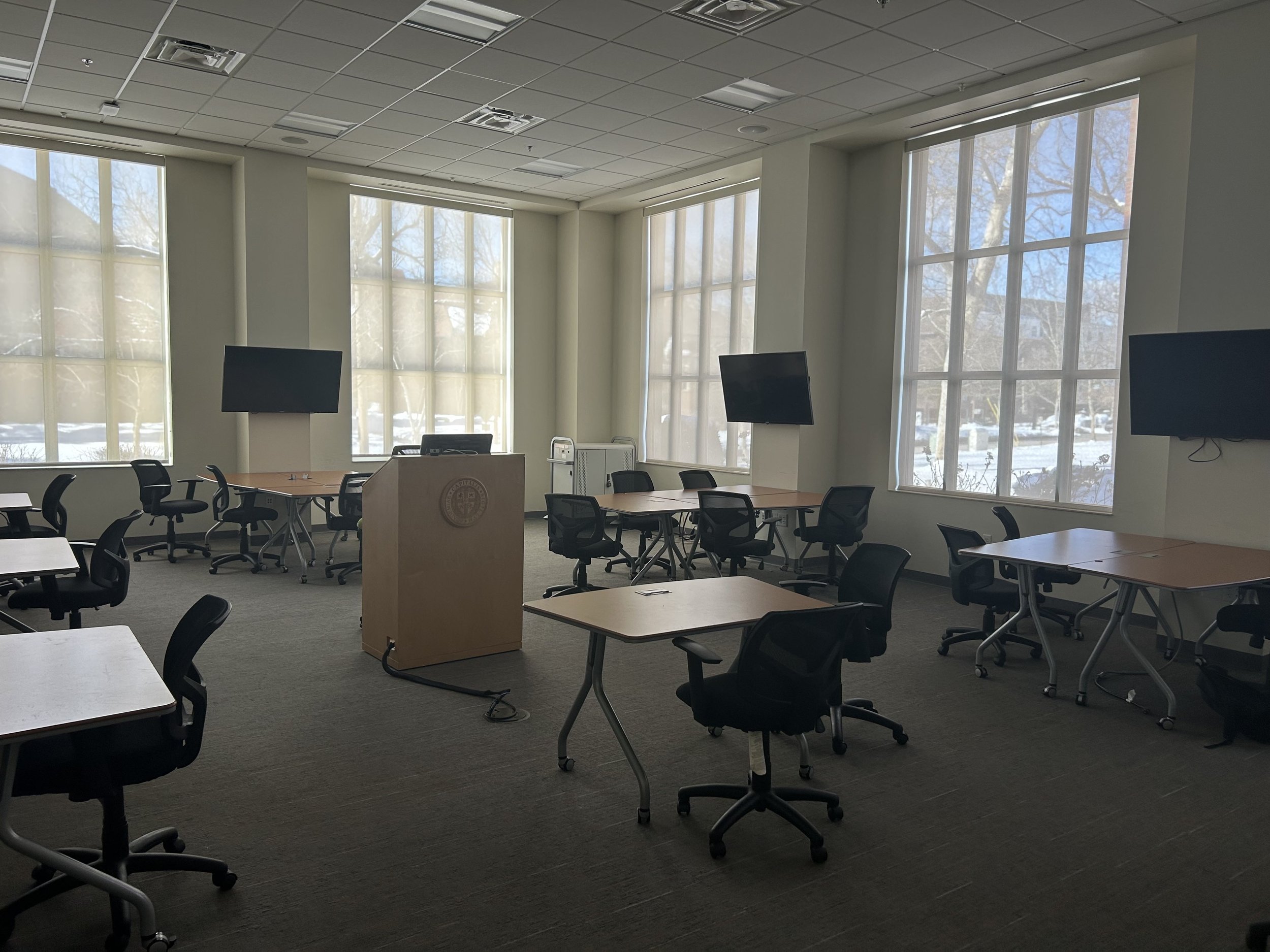
The calm and quiet space I reserved for use during the two-week experiment testing period.
The second step came in acquiring the audio/video clip files, properly edited and organized, to test my subjects’ perception with. With the seven films I had chosen, I had specific segmented clips in mind to show my subjects and test their audio perception with. I found these clips through various means (YouTube, online downloads, etc.) and was able to format them all to fit a simple ProTools session. With only one video track and one audio track, I was able to add simple edits, such as fades in/out and cutting away unnecessary sections, as each clip wasn’t perfect in length. The other benefit of putting each clip into a ProTools session was the easy bouncing and exporting process. I was able to get both an audio-only and an audio-video clip for a film from only one session, which really served to expedite the file creation process. Once I had all my files, I made sure to copy them onto separate locations and organize them into folders so that everything was easily accessible at a later date.
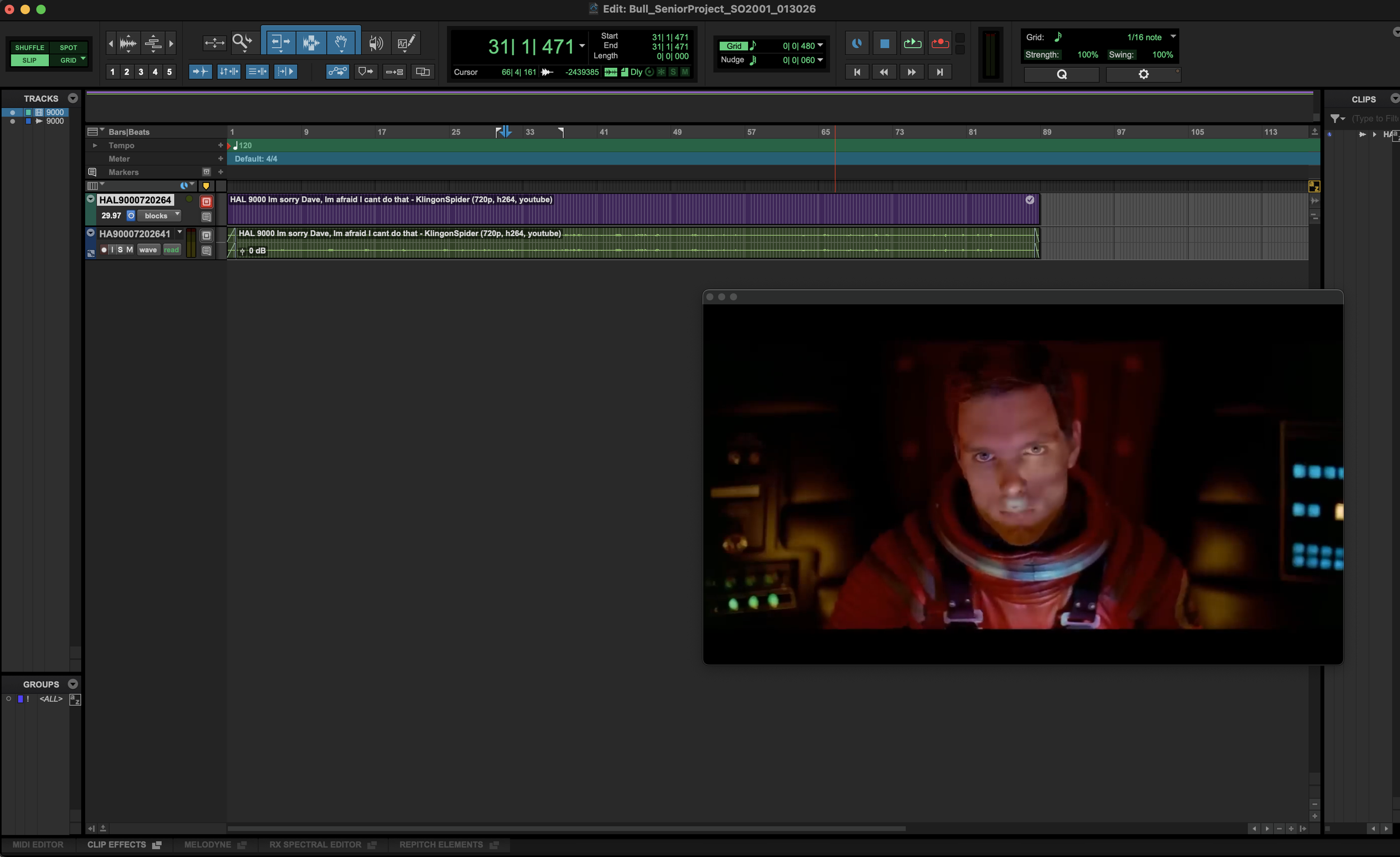
A picture from one of my ProTools sessions, allowing me to export both an audio-only file and an audio-video file.
Finally, the most crucial part was setting up the testing space. To ensure the best results, I wanted to a comfortable, sensory-deprived, and distraction-free environment to expose my subjects to the audio/video clips in. Luckily, I had chosen one of the rooms in the Convergent Media Center with the most comfortable and fresh chairs and furniture. This would allow my subjects to be comfortable while they sit and audibly digest the content I was giving them. Additionally, the temperature in the CMC is relatively average and, especially with the cold weather as of late, very pleasant. The room also has extremely think walls and doors as well as a bit of sound proofing, which hopefully will mean no unexpected noise from the hallway or the rest of the building while I administer the test. The room also has sunshade dimmers to make the room dark, which gives it a bit of a cozy feel to it. My gear and hardware are relatively quite simple: I’ll be playing the audio and video from my own Apple Mac laptop through a pair of KnoxGear closed-back headphone. The closed backing of the headphones will further help the subjects’ perceptive abilities and will hopefully allow them to hear parts of the clips that they would never ordinarily hear watching. I have my questions and notes pages on my phone, ready to take data through both without having to use my laptop and interrupt the subjects’ focus. With my furniture and gear set-up all together, I will be ready to start testing subjects very soon and figuring out each individual’s perceptive abilities.
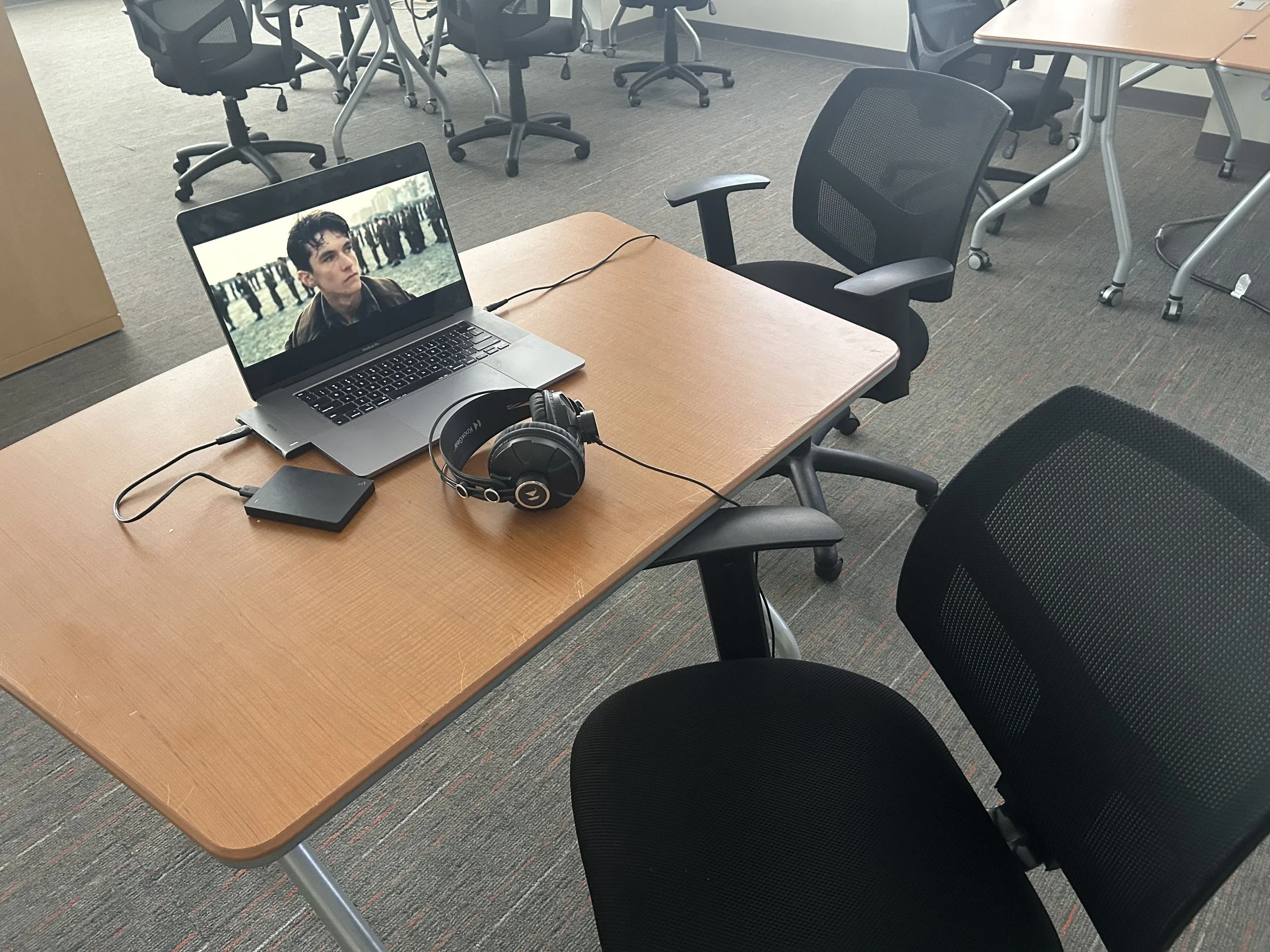
An image of my experiment testing space and equipment, all set up and ready to be used by subjects.
